


NEWS
Congratulations to Alumnus Robert Clark (MA 1998; PhD 2003), who won the CEA's 2024 John Rae Prize. The winner was announced last weekend at the CEA annual meeting. See here for more info.Congratulations to this year's Governor's Challenge team, which won in their group in the first round of the competition. They will proceed to the final round in Ottawa, at the Bank of Canada in February. There were 29 teams in the first round, and the Western Economics team will be in a group of 5 finalists.
The team consists of:
Kaan Alpli
Lis Hoxha
Andrew Kerr
Sofia Tischler
Alternate: Ronan Mahaffy
Faculty Advisor: Steve Williamson
Congratulations to the team!
Western alumni named to Order of Canada
Former Governor of the Bank of Canada and Western Economics alumnus, Stephen S. Poloz, among Canadians recognized by the Governor General. See more here.
Interested in Economics?
Expand your knowledge by taking one of our honors courses. Learn more here!With Deepest Sympathy....
 It is with profound sadness that we announce the passing of Richard "Robin" Carter. Robin was a faculty member in the department after teaching at the University of Victoria, and retired from Western in 1997. He was a kind man, who loved his family, music, and the Rockies. He will be deeply missed.
Memorial Page: https://lfpress.remembering.ca/obituary/richard-anthony-lynch-carter-1092635773

It is with great sadness that we announce the untimely passing of Paul Klein on Monday, August 19th. Paul was a faculty member in the department of Economics from 2000-2010 and a frequent guest speaker in the following years.
Paul was a brilliant economist who had a unique way of thinking about problems. Paul loved Canada, and Western even more, always championing the department and our graduate program. We will miss his dry wit and self-deprecating sense of humour.
Memorial Page: https://www.su.se/institute-for-international-economic-studies/news/in-memory-of-professor-paul-klein-1.757811
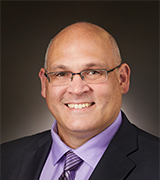 It is with profound sadness that we announce the sudden passing of Charles Saunders on Thursday, December 21st, 2023. Charles was an assistant professor in economics since 2015 and the Master of Financial Economics (MFE) Director since 2018. He was 49 years young, a husband to Mary, and father to Charles (Jr) (19) and William (17).
Obituary: Charles Jasper Saunders Obituary 2023
Economics Student Recipient - Bank of Canada Graduate Student Paper Award 2023
Please join us in extending congratulations to Economics PhD candidate Emmanuel Murray Leclair for his outstanding research paper. His job market paper "Balancing Production and Carbon Emissions with Fuel Substitution", was named the runner up for the Bank of Canada (BoC) Graduate Student Research Paper Award for 2023. For more information, visit BoC Research Paper Awards.
Global Wealth Report
The 2023 UBS Global Wealth Report (GWR) was released on August 15th. Its principal authors include Jim Davies (UWO, Economics, Professor Emeritus), and three other academics in Sweden, the United Kingdom and Uruguay. The report analyzes trends in the levels and distribution of household wealth around the world. It shows that wealth per adult has grown, globally, at an average rate of 6.6% since the year 2000, although that growth has been a little slower since the global financial crisis in 2008. Wealth inequality for the world as a whole has fallen according to most measures this century, largely because of the rise of wealth in China and other emerging market countries. Details of methods and results for all countries are provided in the UBS Global Wealth Databook available at the GWR site.
2023 SSHRC Insight Development Grant Competition
Congratulations to Baxter Robinson for being a recipient of a SSHRC Insight Develpment Grant in support of his work on "Equity Markets and Aggregate Productivity".
CRSI Graduate Student Academic Project Competition
Congratulations to Evan Sauve, co-winner of the Western Centre for Research on Social Inequality (CRSI) Graduate Student Academic Project Competition focused on social inequality.
ACADEMIC VACANCIES
EXPLORE ECONOMICS AT WESTERN



Accessibility
Please contact economics@uwo.ca if you require information in plain text format, or any other accommodation to make physical space accessible to you.
Mental Health Support
For students seeking mental health support and/or campus counselling visit here.
If you have concerns about gender-based violence, you can seek assistance here: support@uwo.ca (GBV Specific) or student.case.manager@uwo.ca
EVENTS
DID YOU KNOW?
Economists study the
Why Study Economics at Western? An Intro to Our Undergraduate Program
Studying Politics, Philosophy and Economics at Western
Ph.D. Job Market Candidates 2023-2024
CONTACT US
Department of Economics
Social Science Centre Rm 4071
Western University
London, Ontario
T. 519 661 3500
F. 519 661 3666
E. economics@uwo.ca